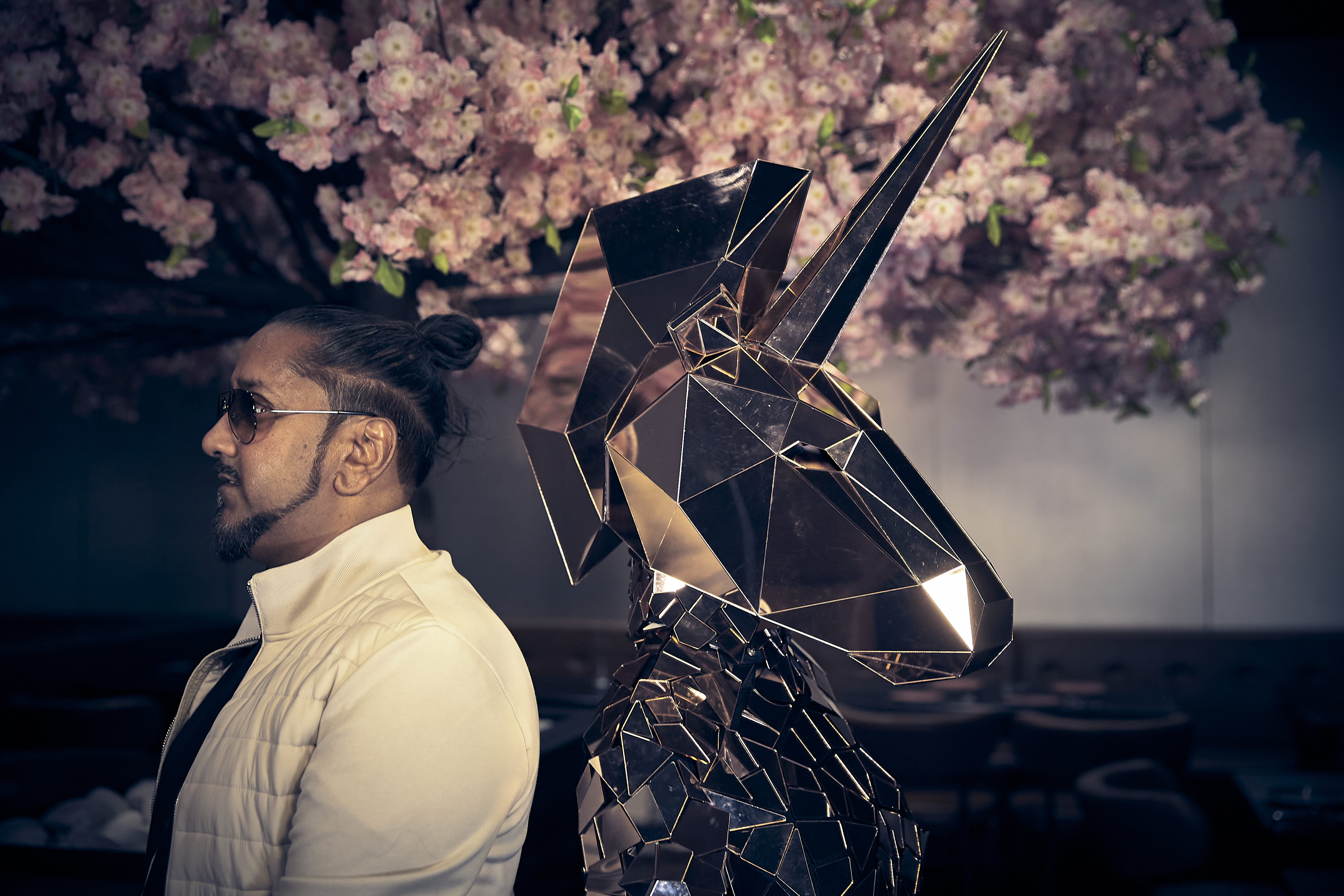
Bally Meeda remembers the moment “THE ONE” started. He was sitting in his lounge, still carrying the weight of a breakup that had shaken his sense of stability. Producer and long-time collaborator Leon, also known as LCamz, tapped out an early beat. Meeda murmured a melody under his breath, almost without thinking. Leon stopped and told him, “That’s brilliant. Work on that.” Within 30 minutes, the foundation of the new single was set.
That speed, Meeda says, is not luck. It is the product of a connection he calls “music telepathy,” a creative alignment that has shaped every stage of Tears of Happiness, the duo’s electronic pop project built from heartbreak, resilience and a shared sense of emotional intuition.
“It is quite difficult to explain, but I would say it is music telepathy,” Meeda said. “An alignment musical from ideas on the same page.”
Tears of Happiness began in a darker moment. Meeda had been trying to hold together a relationship that eventually collapsed. The breakup left him dealing with depression and anxiety. Instead of staying still, he called Leon, whom he had met only weeks earlier, and asked if he could step into his vocal booth and let everything out. That session sparked a creative partnership that now defines the pair’s sound.
Their music blends raw storytelling with bright electronic production. It addresses struggle without leaning into despair, and it holds space for emotional weight while offering a sense of relief. Meeda describes the project’s early work as a turning point during a time when he needed a place to process his fears and uncertainty. Writing became a lifeline, and it still guides how the duo approaches every release.
The transition from those early studio sessions to international recognition happened gradually. They continued to craft songs that explored mental health, heartbreak and resilience while keeping an upbeat tone. Their debut single eventually found its way into all London Nike stores, even without a formal pitch. Another track, “Lift Me Up,” reached number 12 on Luxembourg’s official Spotify chart, sharing space with Billie Eilish, Ed Sheeran and Post Malone. For an independent duo, the milestones became reminders that their personal stories were landing with listeners far beyond their own circle.

“I’m just happy to be making great music that resonates,” Meeda said. “It’s even better if it resonates with multi-million pound companies as they have a great sense of what is commercial. Being alongside global artists makes me feel validated as a musical creator.”
Their new single, “THE ONE,” builds on that momentum. The song explores the uncertainty of searching for something meaningful, whether in love or in personal healing. Written from Meeda’s own experiences and inspired by the stories of people close to him, the track captures a mix of vulnerability and hope that has become central to Tears of Happiness.
If there is a defining trait in the duo’s sound, it is the ability to balance heartbreak and euphoria without losing sincerity. Their songs often feel like moments of release, where emotion swells into something cathartic. Music journalist Paul Moody described their work as “songs which will have you punching the air while crying your eyes out,” a line Meeda considers accurate.
“Our experience makes us understand that we all suffer with difficulties but remaining ‘still’ allows some of the difficulties to pass,” he said. “However, the ones that don’t pass all have a little bright light shining in there somewhere. Whatever difficulties we are facing, we want to make sure that you’re not alone, and we hope our music gives you the medicine you need to see a more positive side of your problems.”
The duo’s workflow has shifted in recent years. Leon has been traveling, which means much of their collaboration has taken place online. Despite the distance, Meeda says the trust has only grown stronger.
“It’s always better to be working within close proximity, but we have such a telepathic alignment that the distance doesn’t hinder our progress,” he said. “In some ways, it makes our work ethic more professional.”

When they do meet in person, they move quickly. Both rely on instinct in the earliest stages of songwriting, then step back and make deliberate choices about structure, production and pacing. Meeda says they rely heavily on their own judgment about when a track is finished.
“In the creative process, you must always feel your way and pour out what is inside of you,” he said. “Once the creative element is done, it’s back to being sensible about making the track listenable. We are the artists, so we trust ourselves on when it is right. Taking a few weeks off from a track is always a good idea. Coming back to it a few weeks later always tells you if something needs tweaking or not.”
That process has earned respect from industry veterans, including Abbey Road mastering engineer Geoff Pesche, who has praised Leon’s production work. For Meeda, that professional recognition matters, but the emotional reception from listeners still carries more weight.
The project itself grew from a place where joy felt far away. Over time, as Meeda wrote more, the darkness began to shift.
“It describes the project journey,” he said of the name Tears of Happiness. “I was in a dark place when I first went to the studio, and over time, the darkness turned to light. The songs still however reflect the mini journeys of darkness that can transpire to light.”
That transformation is also present in the way Meeda approaches writing about mental health. He avoids heavy-handed messaging and focuses instead on comfort and connection.
“The same way as in life, a warm embrace or hug is sometimes better than talking through your demons,” he said.

When asked if there was a moment when he realized music had brought back a sense of hope, Meeda pointed to their first release.
“Our first release ‘CLOSE TO YOU’ made me realise that life can pass you by without doing the things you really want to do or say,” he said. “Stop procrastinating and live life.”
That mindset continues to influence how he talks about the future of Tears of Happiness. He has lost two close friends to suicide, and part of the project’s purpose is to give listeners something he wishes had been available to them.
“I hope our music inspires people to hold on, even when life feels overwhelming and dark,” he said. “I want listeners to know that it’s OK not to feel OK, and that they are never truly alone.”
As for “THE ONE,” Meeda hopes it speaks directly to listeners who need reassurance on their hardest nights.
“I’m not the only one who feels alone and different. I will take my time to find ‘THE ONE.’”
Leave a Reply