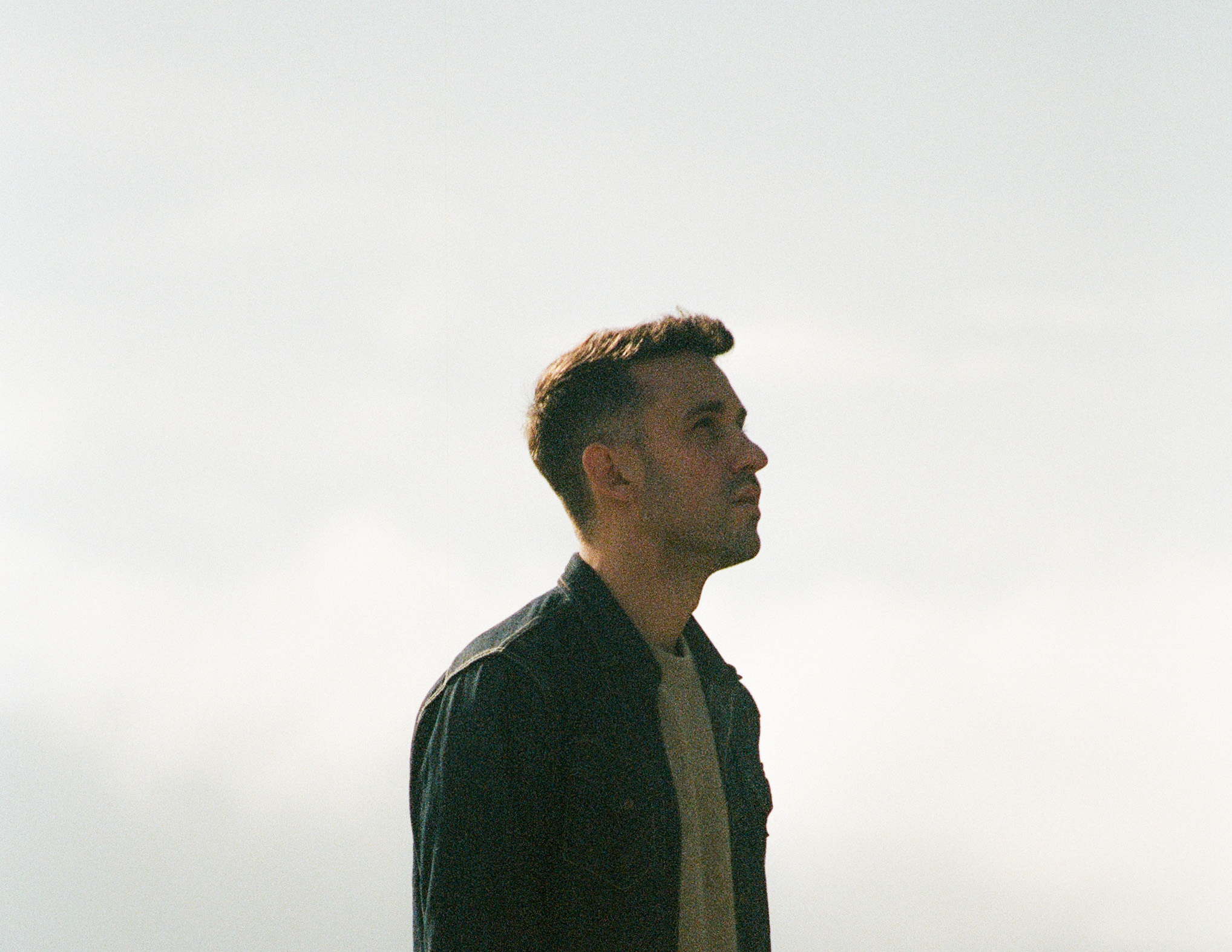
For Swedish-Greek singer-songwriter Plàsi, making music has always been about movement — between places, between emotions, between phases of life. His new EP, Camino, is a collection of songs and a personal landmark.
“This EP was created in an optimistic sphere, with good times to come,” Plàsi said in an exclusive interview with Entertainment Flair. “While writing the EP, I had decided to propose to my girlfriend, and while producing it, we were about to get married.”
The word camino means “path” in Spanish. For Plàsi, it symbolized both a literal journey — moving from Stockholm to Amsterdam with his now-wife — and an inner one.
“I felt it was time to bring home the production into my own studio again and be as playful as possible with the elements I had around me,” he said.
That sense of freedom seeps into every corner of the EP. Acoustic textures meet cinematic swells. There’s warmth and simplicity, but also reflection, solitude and a quiet sense of courage.
The record opens a new chapter for Plàsi’s creative process. After years of working with other producers, Camino marks his return to the production seat.
“When taking one big step, such as marrying, it also makes you do other things which you have been wanting to do for a long time,” he said. “Such as writing a song in Greek with ‘Efiga,’ reflecting about things we often choose to push aside such as in ‘Father’s Eyes’ and taking the producer seat again.”
“Making things I had been longing for,” he said simply. That, to him, is what Camino is about.
“Father’s Eyes,” one of the standout tracks, explores generational tension — how children view their parents and how those parents may be seeing them right back. It’s a song that tries to hold both truths.
“You have to be open minded in the way you are seeing things, since there are always two sides of the coin,” Plàsi said. “With friends of mine starting to get their own kids around me, it made me reflect on it from the other perspective as well.”
Writing the song became a process of emotional recalibration.
“After analyzing these often complex relationships while writing this song, it seemed like we’re drawn towards defining our differences rather than learning from our similarities,” he said.
That tension — between growth and grief, between clarity and complexity — echoes through the entire EP.
Though Camino began in light, it did not stay there.
“It was written and produced during a rather uplifting period of my life,” Plàsi said. “But just as we were to wrap up the mixes and create all the visual content, my grandmother had an accident down in Greece. It all got quite emergent and, unfortunately, led to her eventually passing away.”
That loss changed the way the EP came together. Plàsi decided to return to Greece to finish the visuals.
“It became even more clear to me that I wanted to shoot the music video to ‘Father’s Eyes’ and all the photos to the EP close to my Greek roots,” he said. “It was emotional days, constantly with grandma in my thoughts and with the music in my ears, as we were going around with photographer Amanda Gylling shooting along the olive fields, mountains and the Mediterranean Sea.”
The production process itself was a dance between two cities. Plàsi recorded in Amsterdam, then expanded the sound in Stockholm with co-producer Hannes Hasselberg.
“My first EP Now & Then in 2016 and my first album People in 2018, I recorded myself in my apartment with limited equipment and space,” Plàsi said. “Later on, the sonic palette expanded with various collaborations leading to its peak cinematic wise in 2024 with the Salamina EP produced by Björn Yttling.”
But Camino was about reclaiming the core of his sound.
“After moving to Amsterdam and setting up a new studio space mainly consisting of organic and acoustic elements, I wanted to try bringing myself back to the production seat.”
The result is a record that moves fluidly between the intimate and the expansive.
“We started off with my more stripped back approach in the Amsterdam studio and later on, we flew the productions up to our bigger studio in Stockholm,” he said.
That duality became part of the EP’s identity.
“While Plàsi in a Stockholm environment has been drawn into bigger and more cinematic sounds the last few years, I found back to the core of my artist project in the Dutch capital,” he said. “The mix of the two has created the unique sound of this EP.”
Though Camino carries emotional weight, it never feels heavy. The playfulness in the arrangements keeps it afloat. That balance is intentional.
“The writing, the lyrics and the meaning behind the songs are made before you enter the studio,” Plàsi said. “While in the studio, we try to express the compositions in the form of sounds. That’s when the playfulness starts and a part which I love maybe the most in the process of creating music.”
The EP feels deeply personal, but it’s not self-centered. It reflects Plàsi’s belief that introspection and openness can live in the same space.
There’s a lyric that repeats in the EP: “For now, I walk my camino.” It’s a simple phrase, but for Plàsi, it represents one of the biggest decisions of his life.
“We used to live in Copenhagen with my Dutch wife, in between our two home countries,” he said. “We wanted to try to live on neutral ground where one of us didn’t have the advantage of having an established group of friends or family.”
Eventually, the couple chose to settle in Amsterdam. It was a turning point.
“This was not only ours but also my camino,” Plàsi said. “Not the choice I would have made if I followed the norms and the most walked route perhaps, but the road that life directed me towards. Somewhere between my two home countries Sweden and Greece.”
Touring with established artists like José González and Hollow Coves gave Plàsi another perspective on the long game of artistry.
“Except for that, I’ve gotten a lot of creative inspiration from both the way they write, produce and perform. It has also given me the courage to continue to work hard to one day stand myself to play for similar audiences,” he said.
He acknowledged the weight of navigating an industry that can feel unpredictable.
“Probably one of the reasons many artists and bands stop is because they get hit too hard from short-term ‘failure,’” he said. “But these short-term obstacles are most of the time better to ignore if you want to come anywhere with your art.”
Watching others sustain their careers gave him a dose of resilience.
“Opening for bigger acts… has given me energy to keep looking at things long term and keep loving what I’m doing,” he said.
In the spirit of Camino, Plàsi offered a piece of advice to anyone standing at the edge of their own path.
“Don’t expect short-term success, but keep the long-term mindset in what you want to achieve when you take that first important step,” he said. “It will be one of many steps, but you have to always remember yourself why you decided to take the first one.”
That mindset defines the record. Camino isn’t about arrival. It’s about motion, faith and the quiet courage it takes to keep walking — step by step, song by song.
Leave a Reply